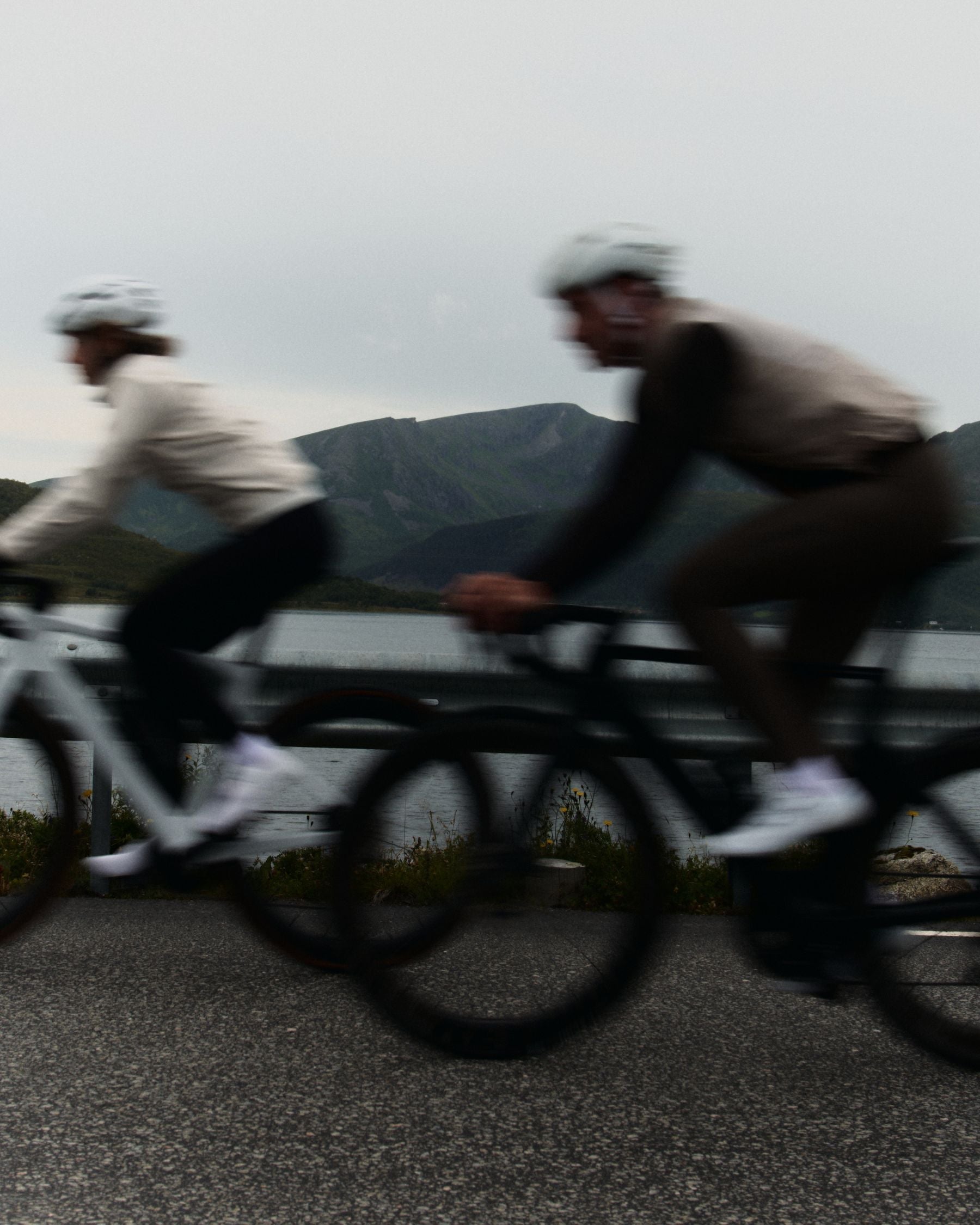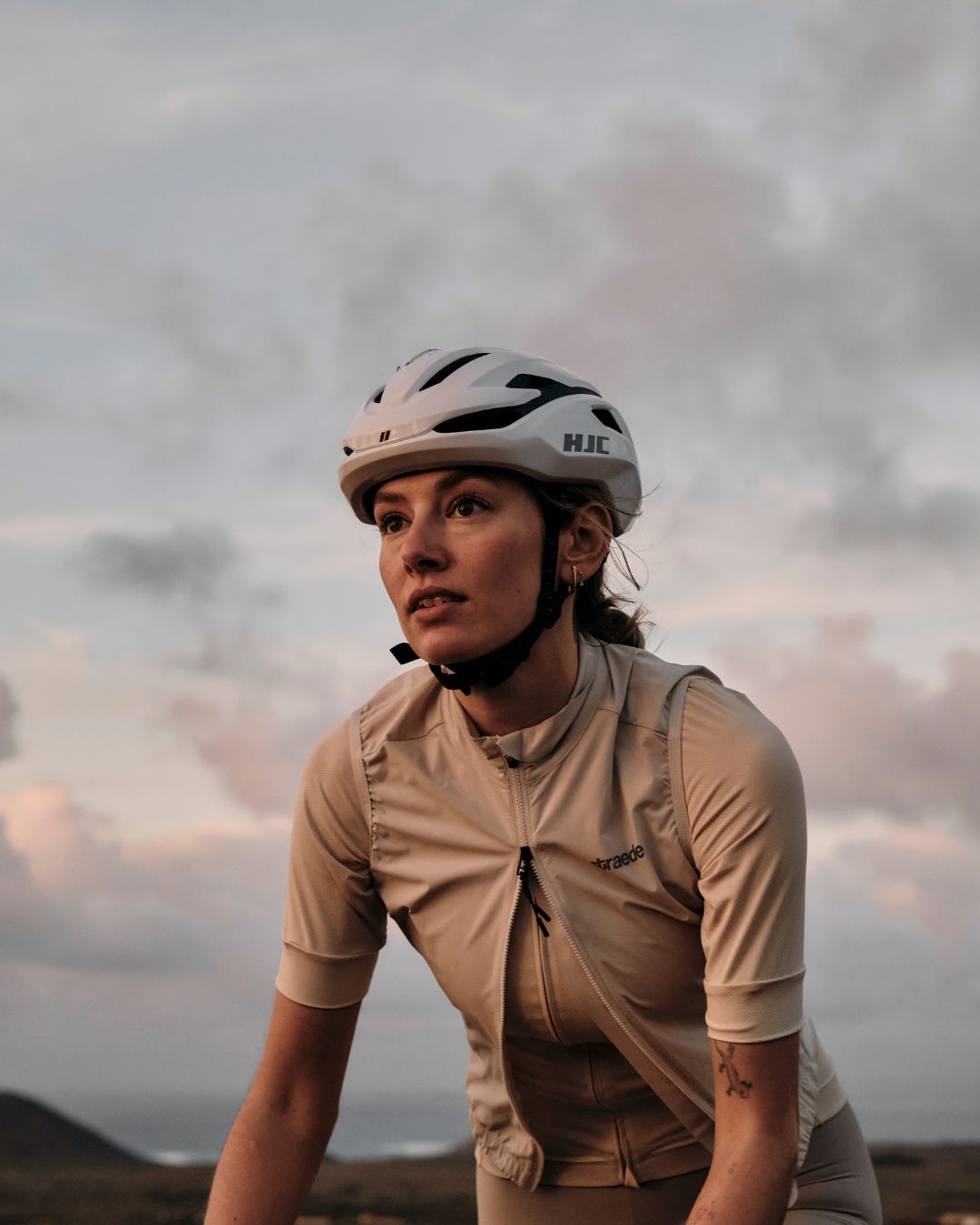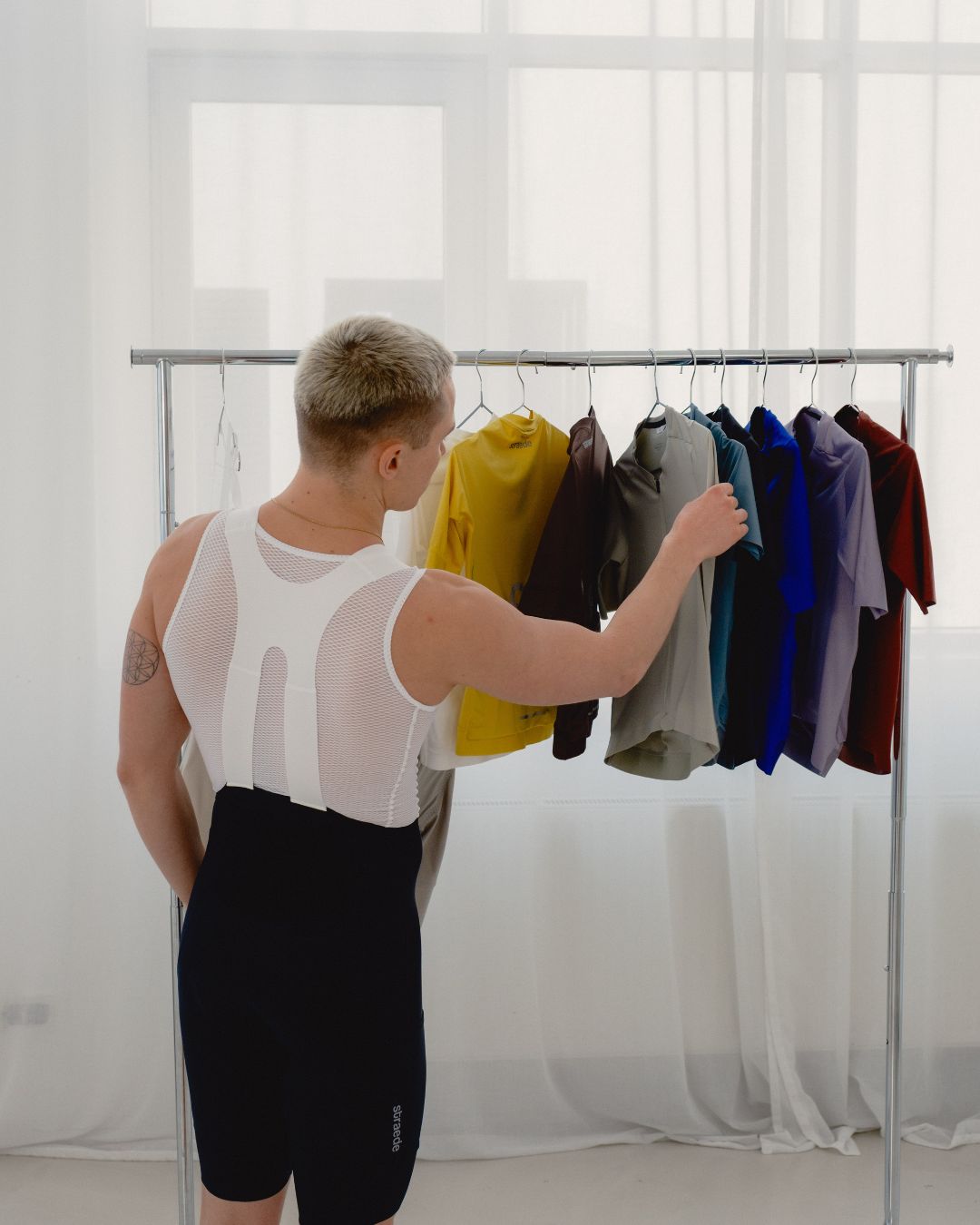
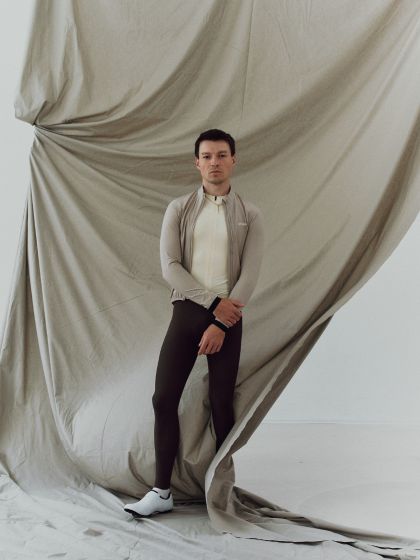
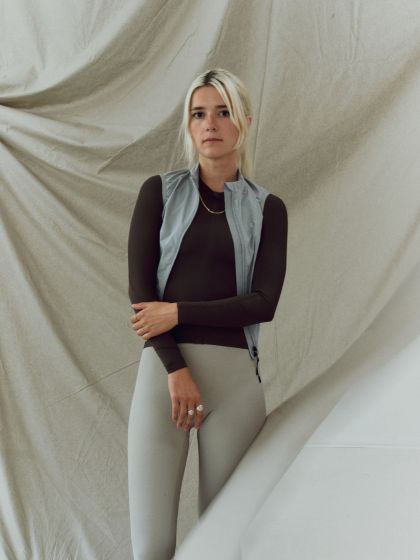
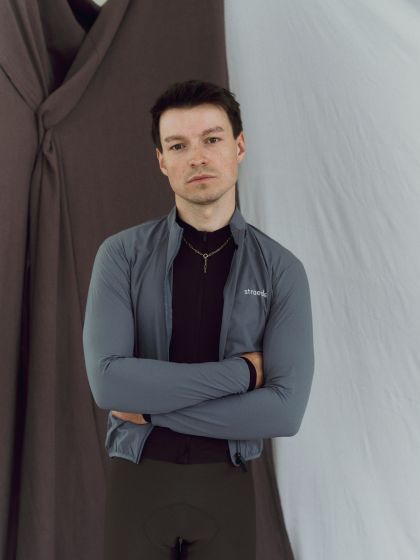
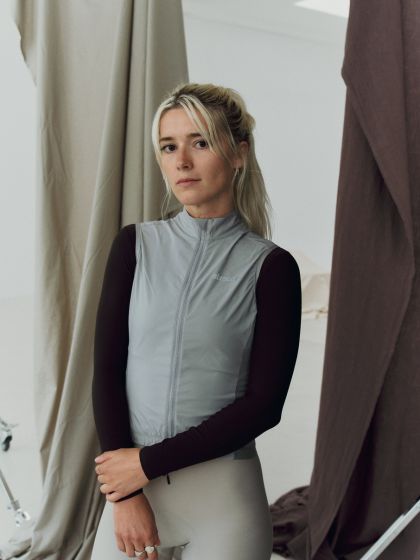
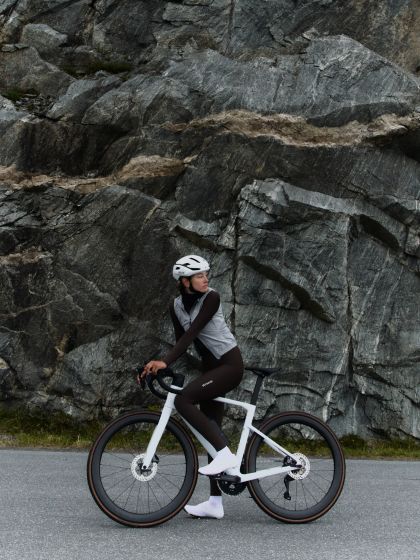
In summer a jersey and bib shorts are enough; in winter the combination is usually fixed, because it stays cold all day. Autumn sits in between and brings constantly changing conditions: damp morning air, sun at midday, cool shaded sections and dusk setting in early. Within three hours you can ride through several temperature ranges. No weather forecast takes the decision about what you need along the way off your hands. In autumn, what matters most is how well things combine, not the one right garment.

Contents of this page
The key points at a glance
- Baselayer and jersey stay on: which jersey works depends above all on how the temperature develops during your ride.
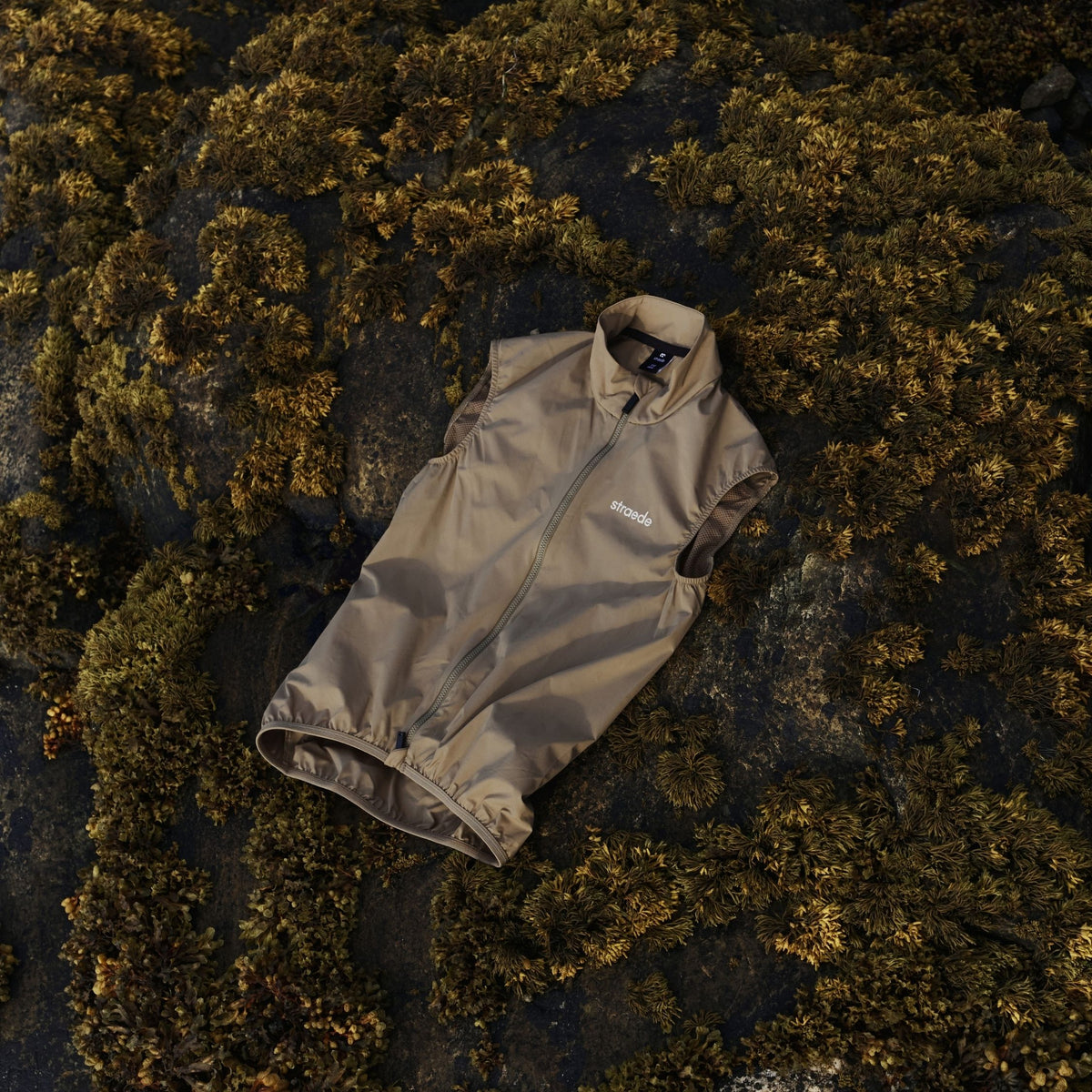
- Pack a vest or windbreaker: it protects you from the wind and gives you an extra layer along the way.
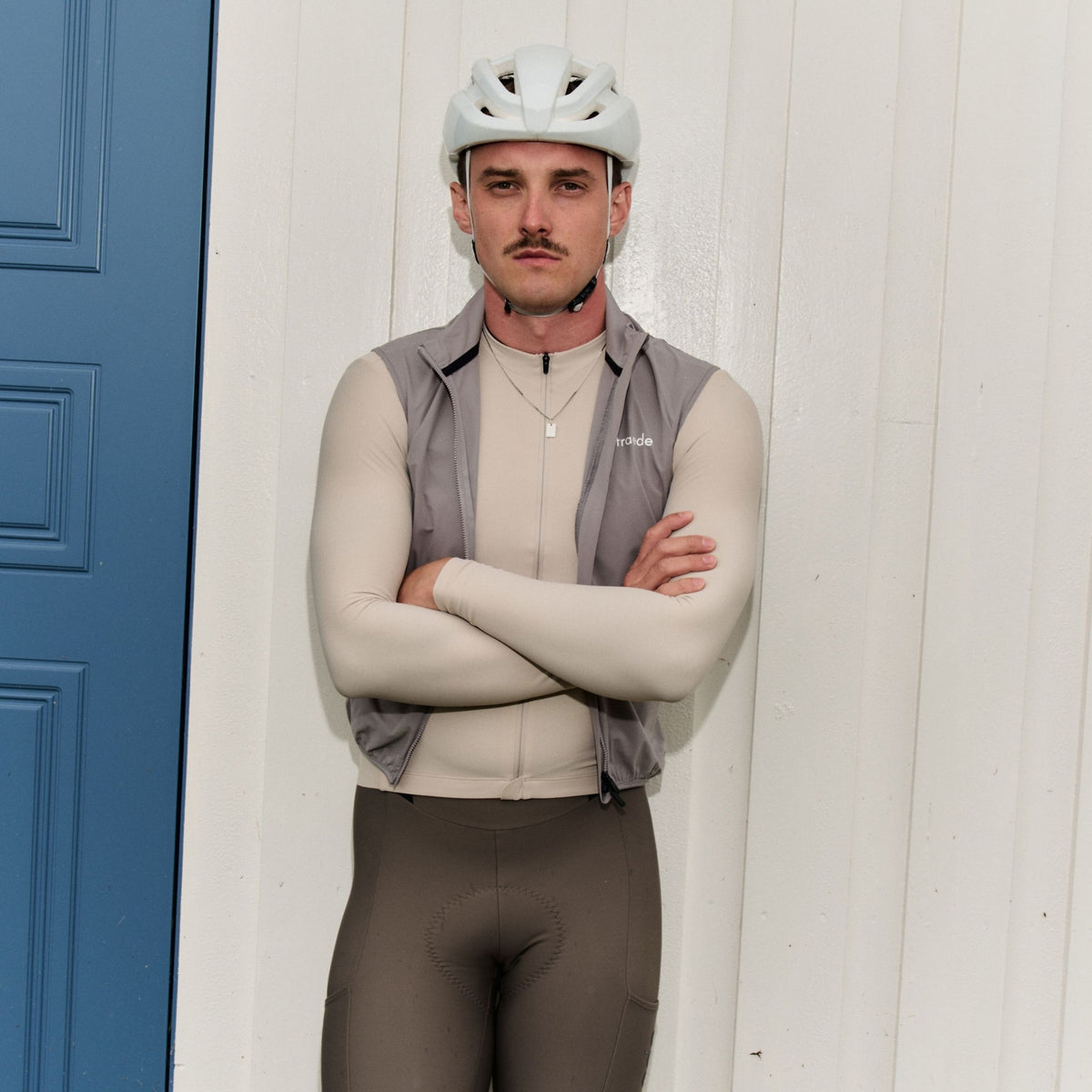
- If it gets noticeably warmer over the day: a short-sleeve jersey with arm warmers and bib shorts with leg warmers as extra layers that you can simply take off later.
- If it stays cool all day: a long-sleeve jersey and long bib tights are the best choice.
- If it gets colder along the way: choose your base outfit for the temperature at the start and take a vest or windbreaker for later.
- If it stays cold for good: then it is time for the warmer layers from the winter collection.
- If it gets dark early: look for reflective details on your jersey, jacket and bib tights so that you stay clearly visible in poor light.
Road cycling in autumn: more to consider than in summer & winter
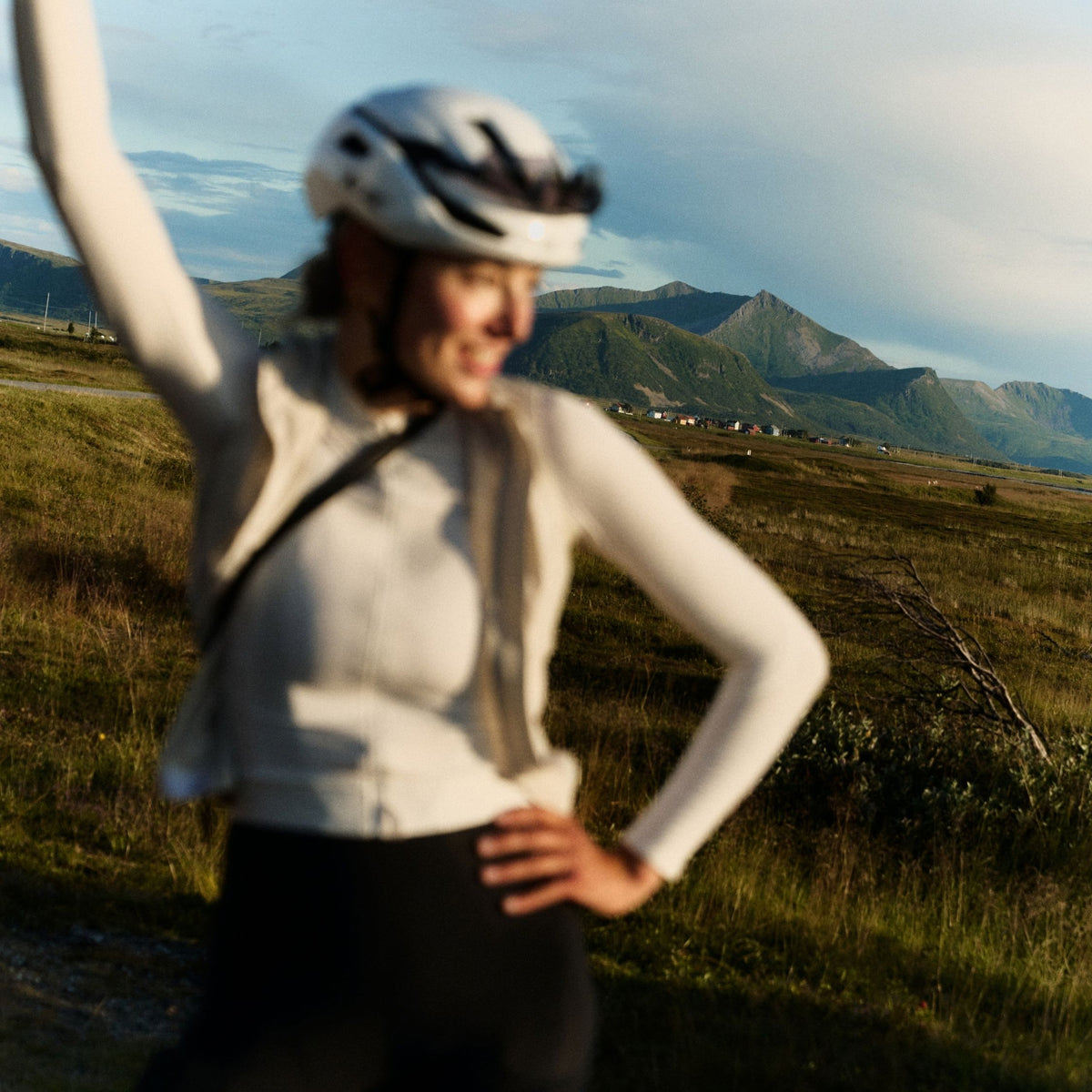
What stays on and what fits in your pocket
The layers for autumn
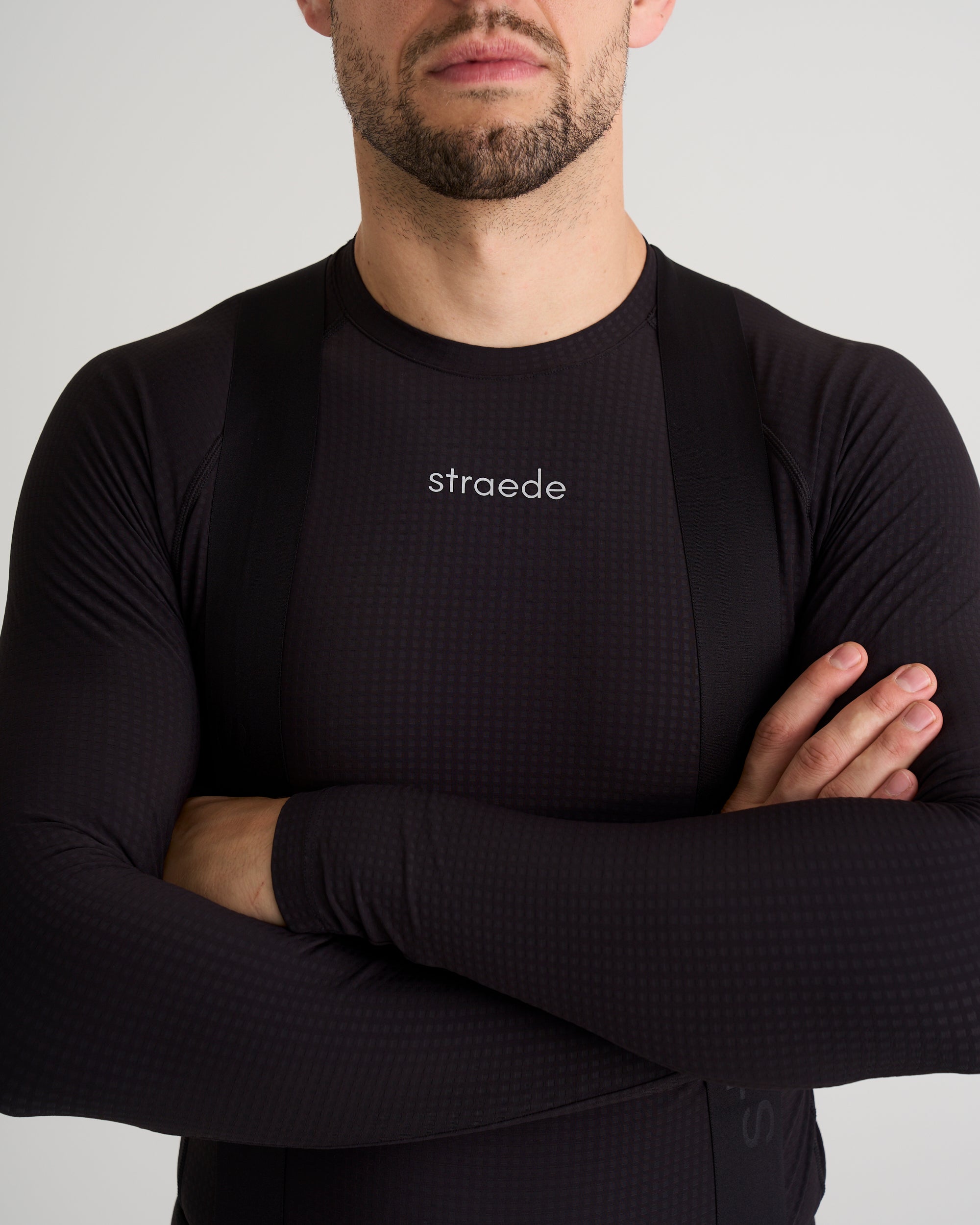
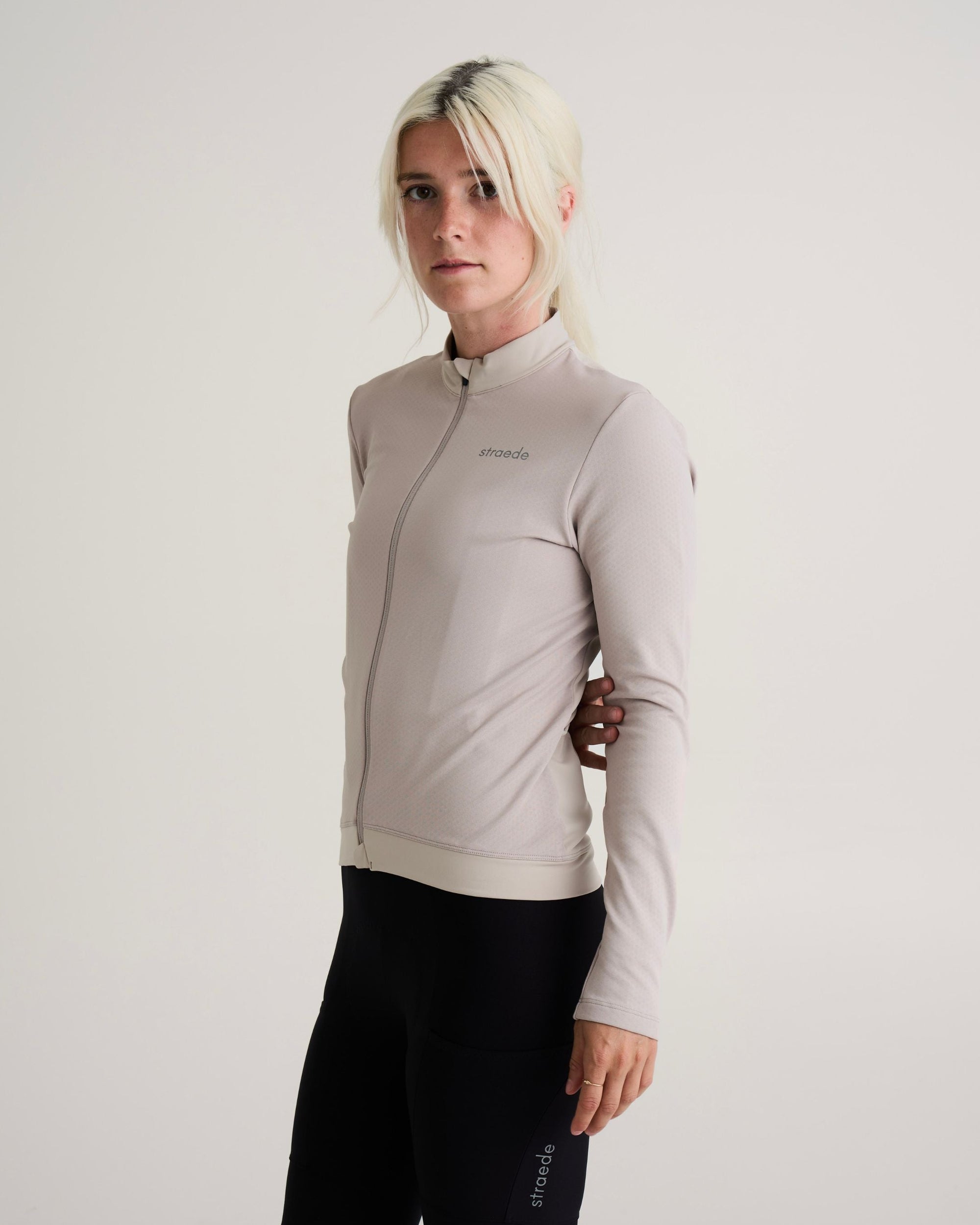
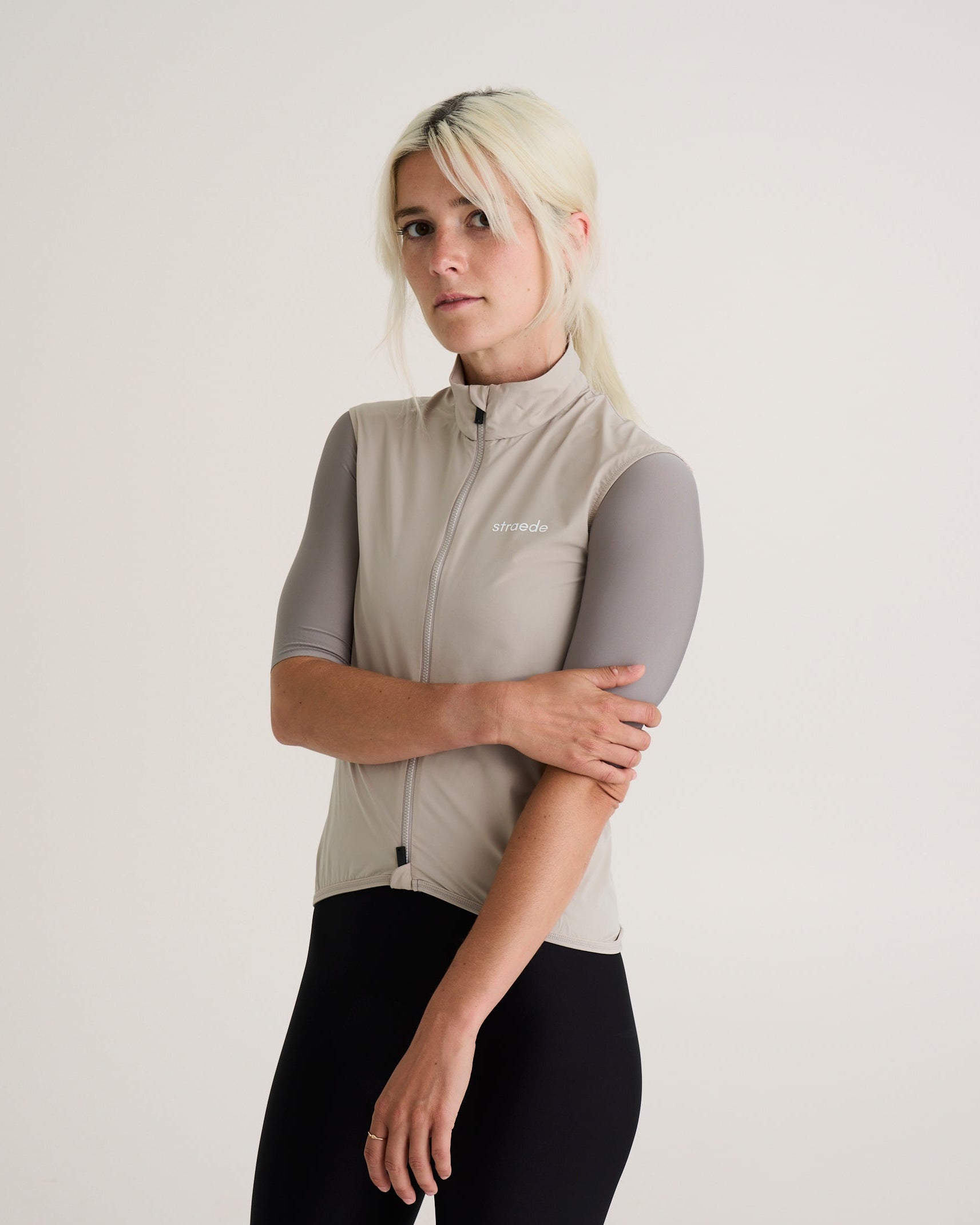
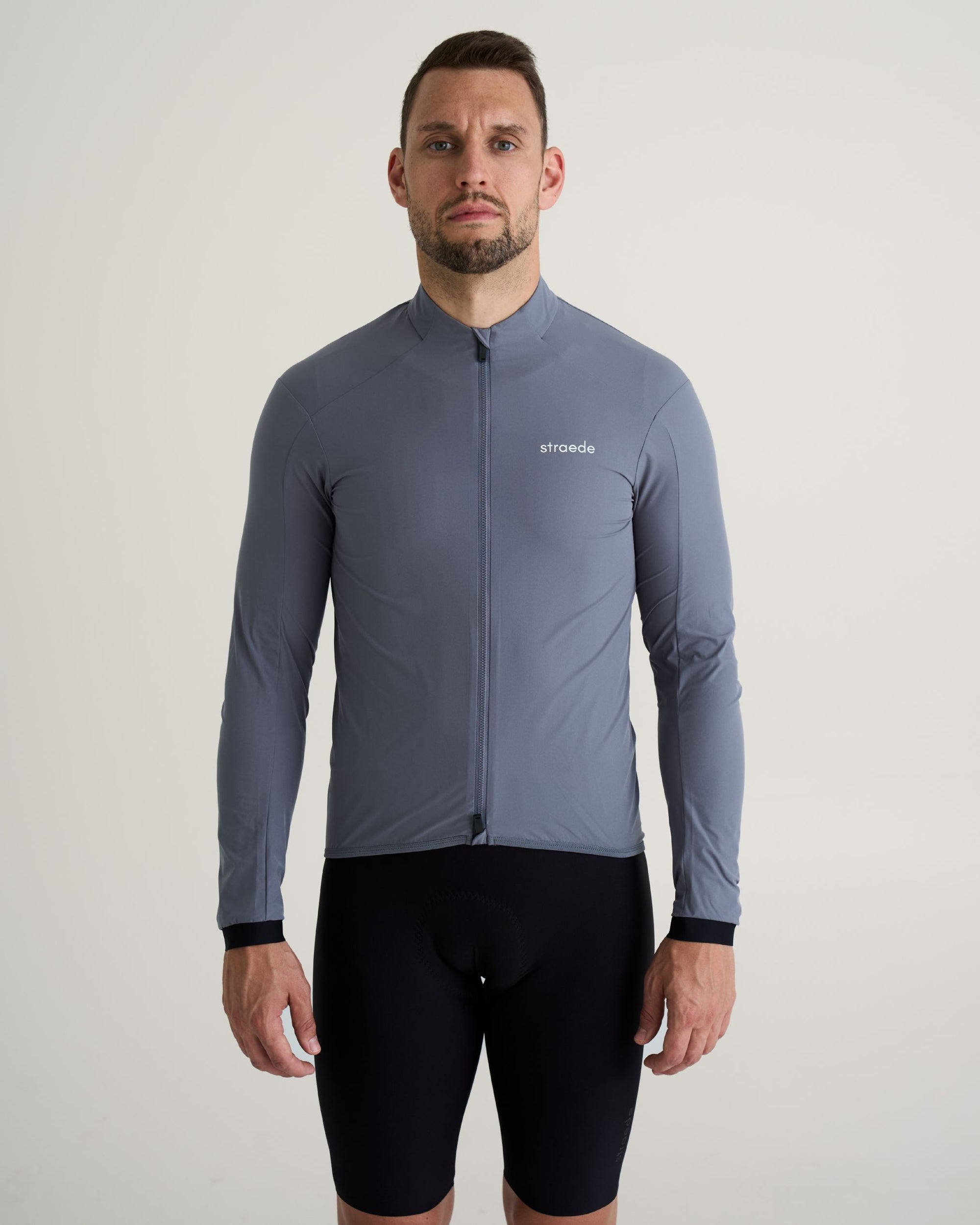
▶︎ All pieces are as light and compact as possible so that you can stow them in your jersey pocket along the way.
The pieces in detail
Which combination is right depends above all on how the temperature develops during your ride. The individual pieces can be combined freely and work just as well in spring or on cool summer mornings.
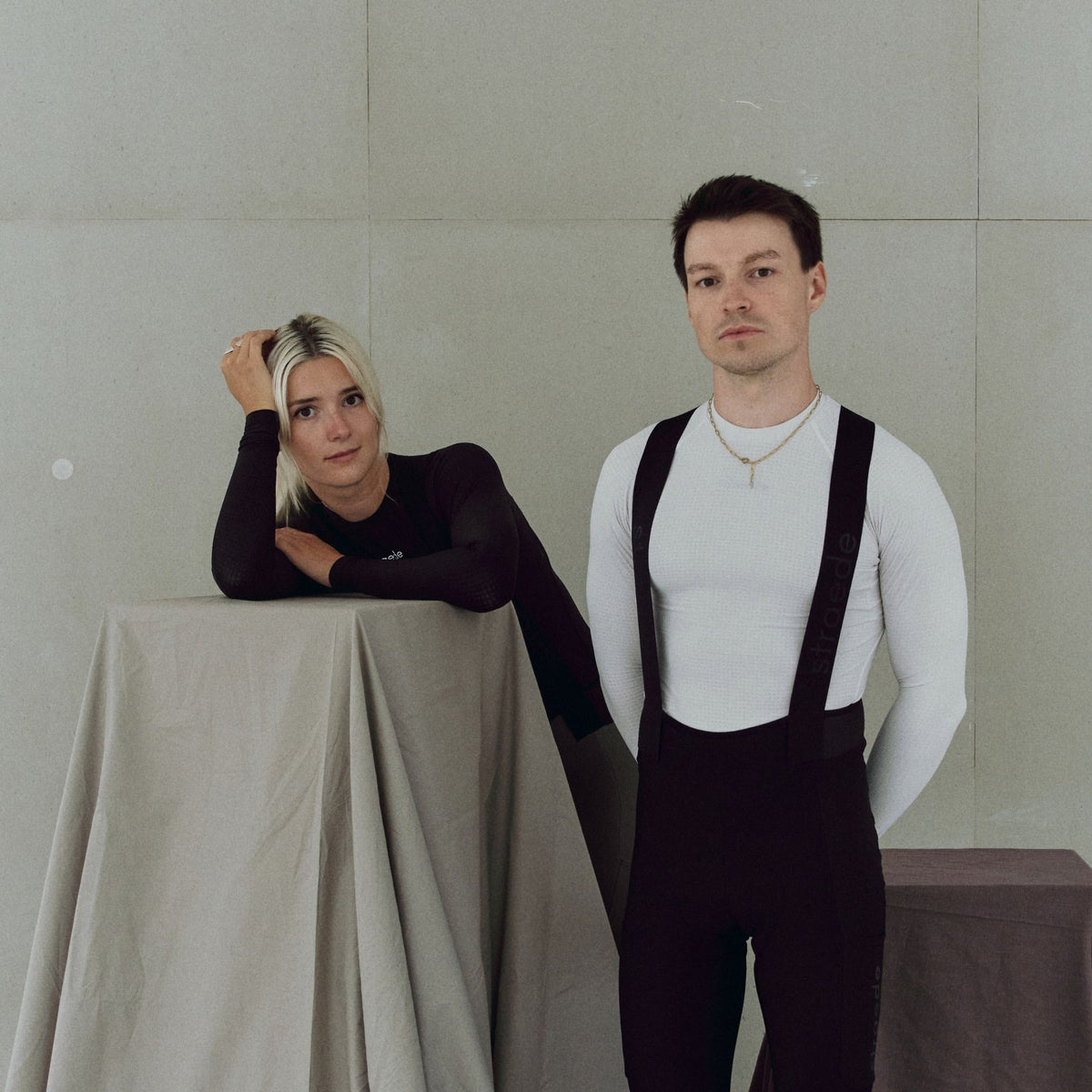
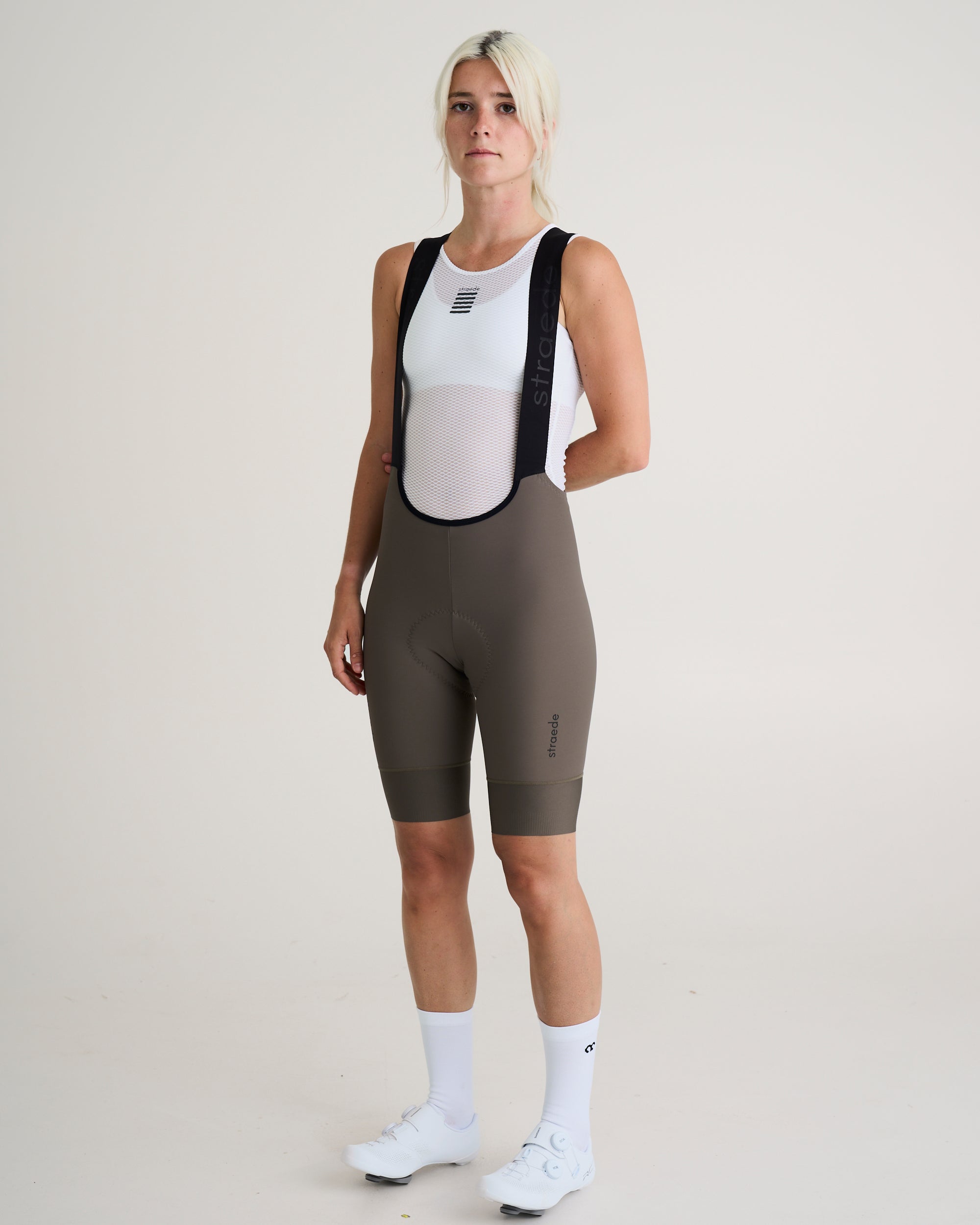
The baselayer: staying dry when it gets cool
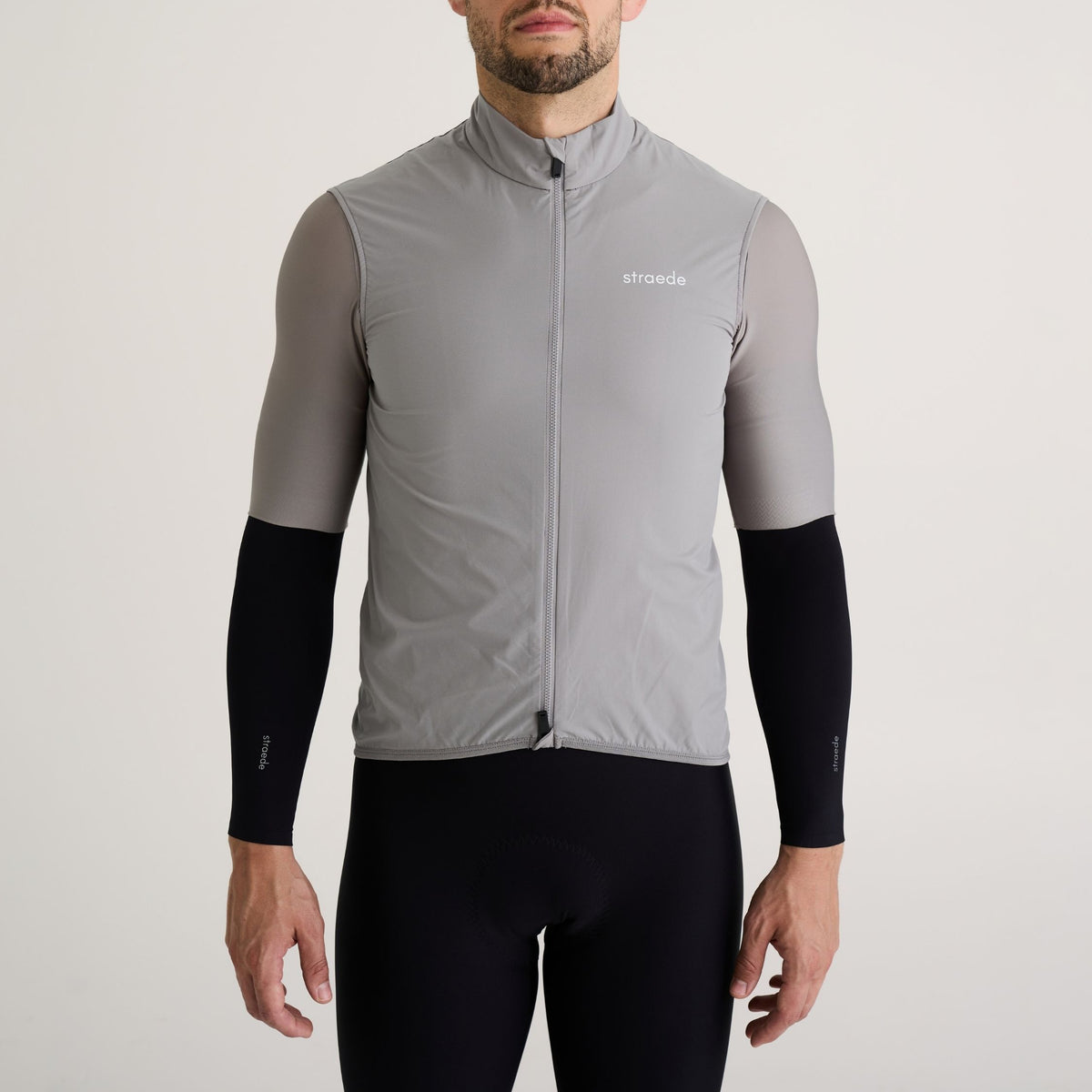
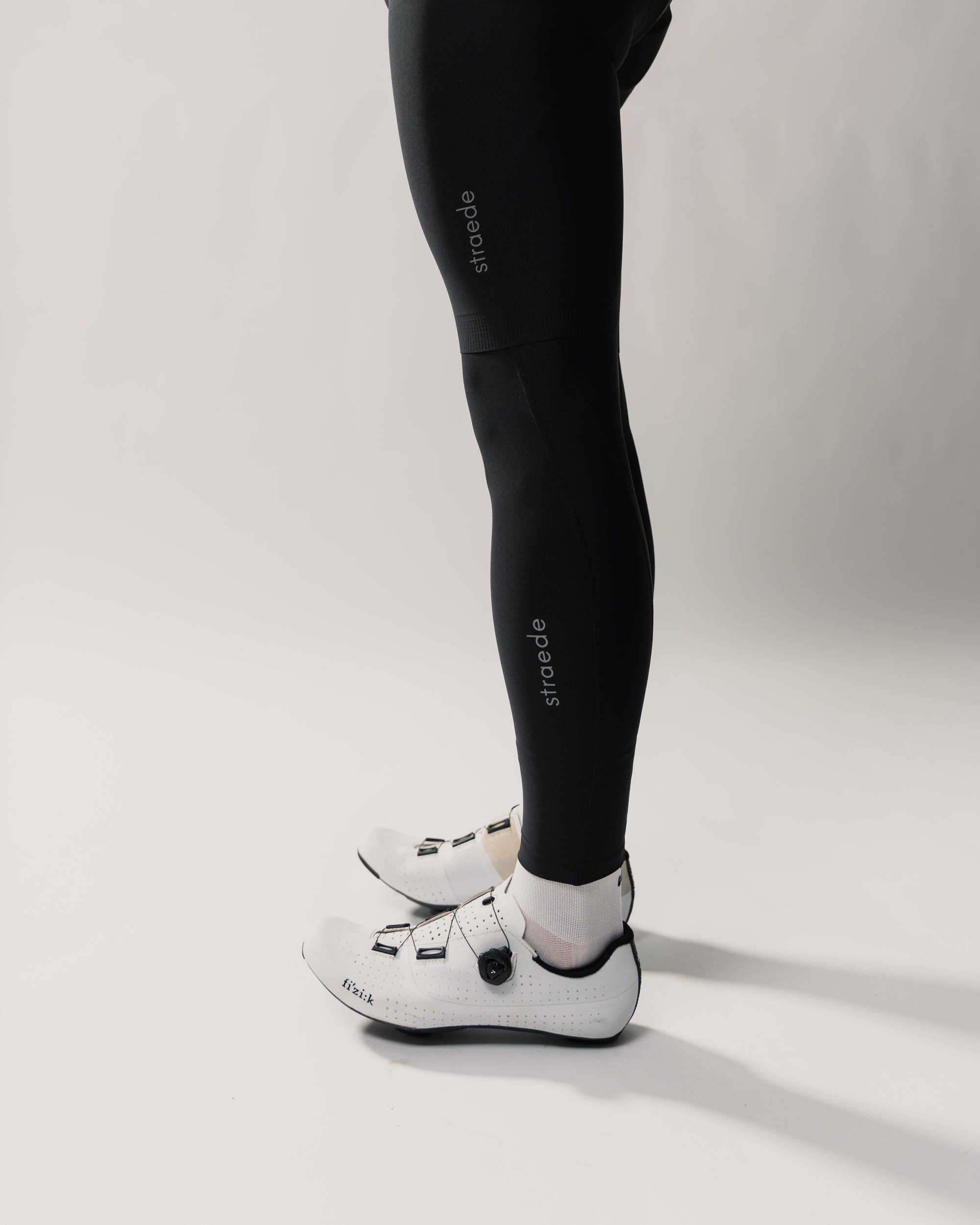
Arm and leg warmers: for days that get warmer
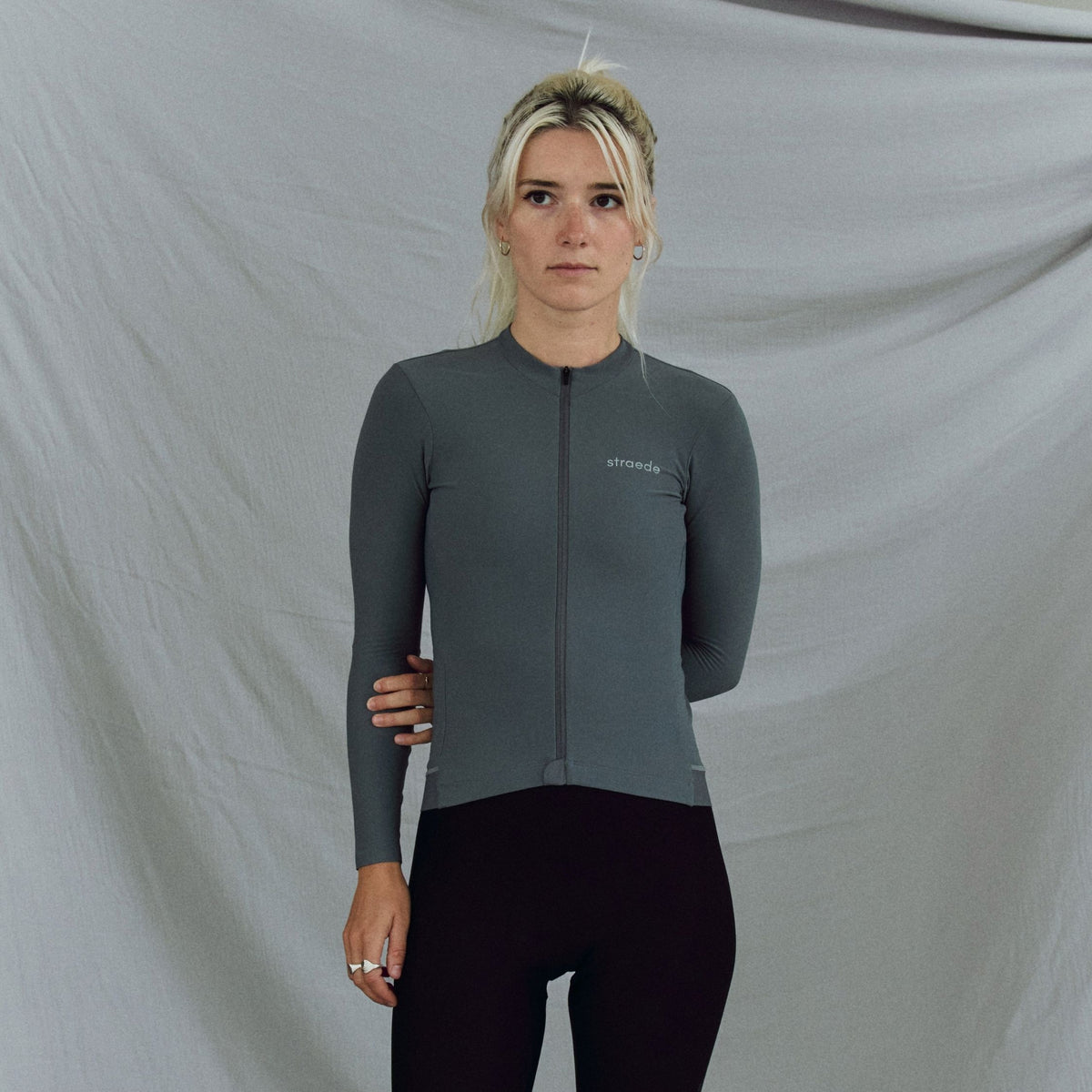
Long-sleeve jersey: for days that stay cool
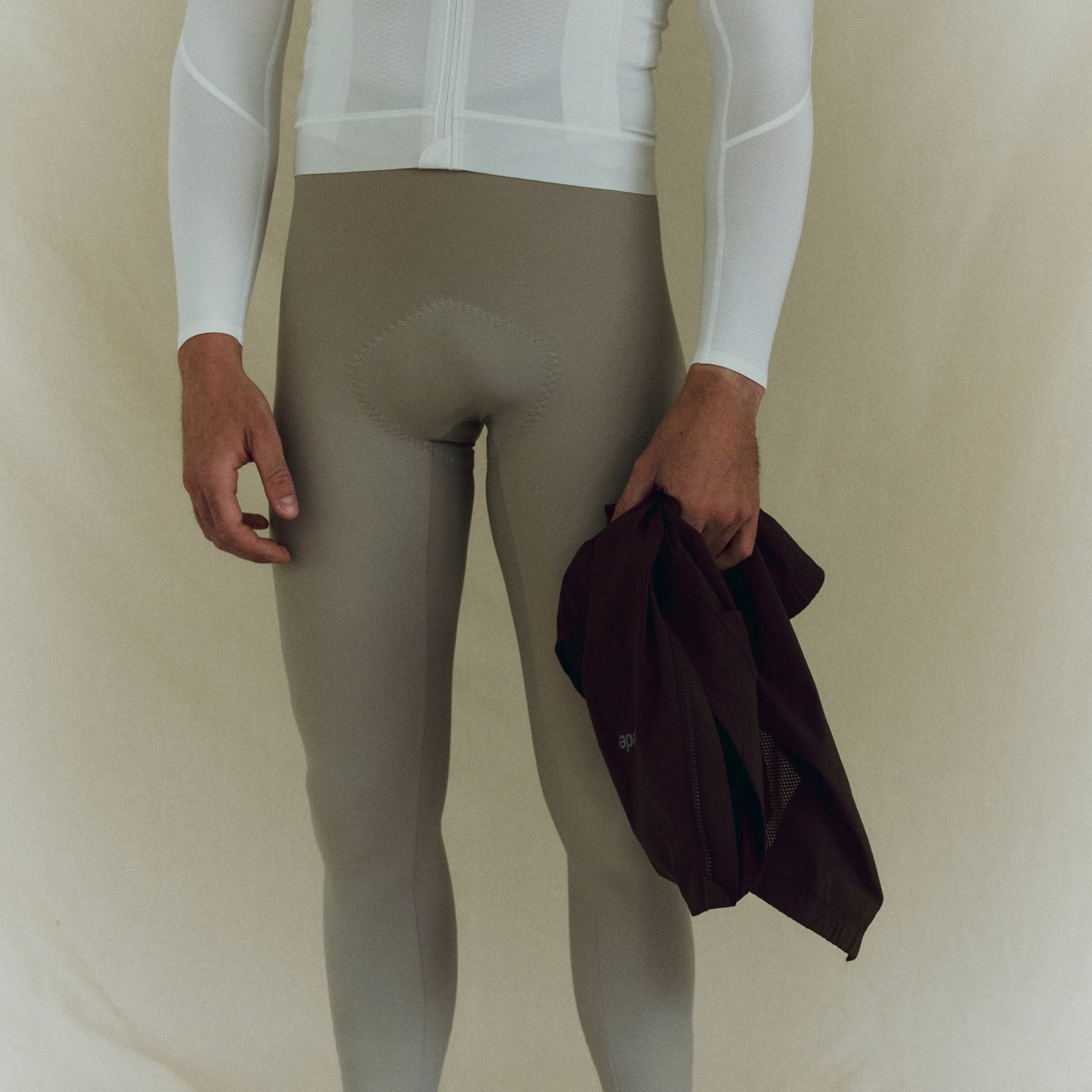
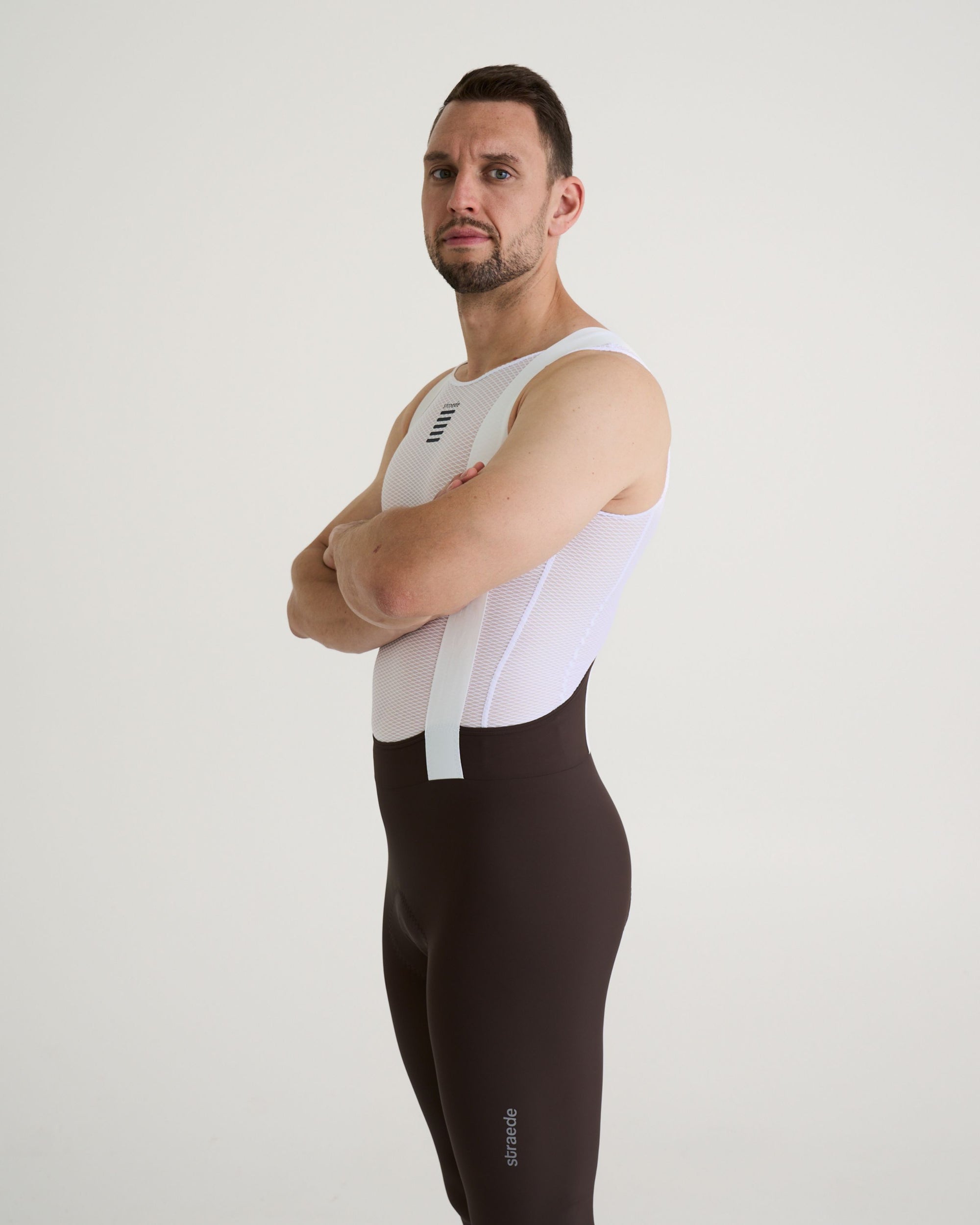
Long bib tights: when your legs should stay covered
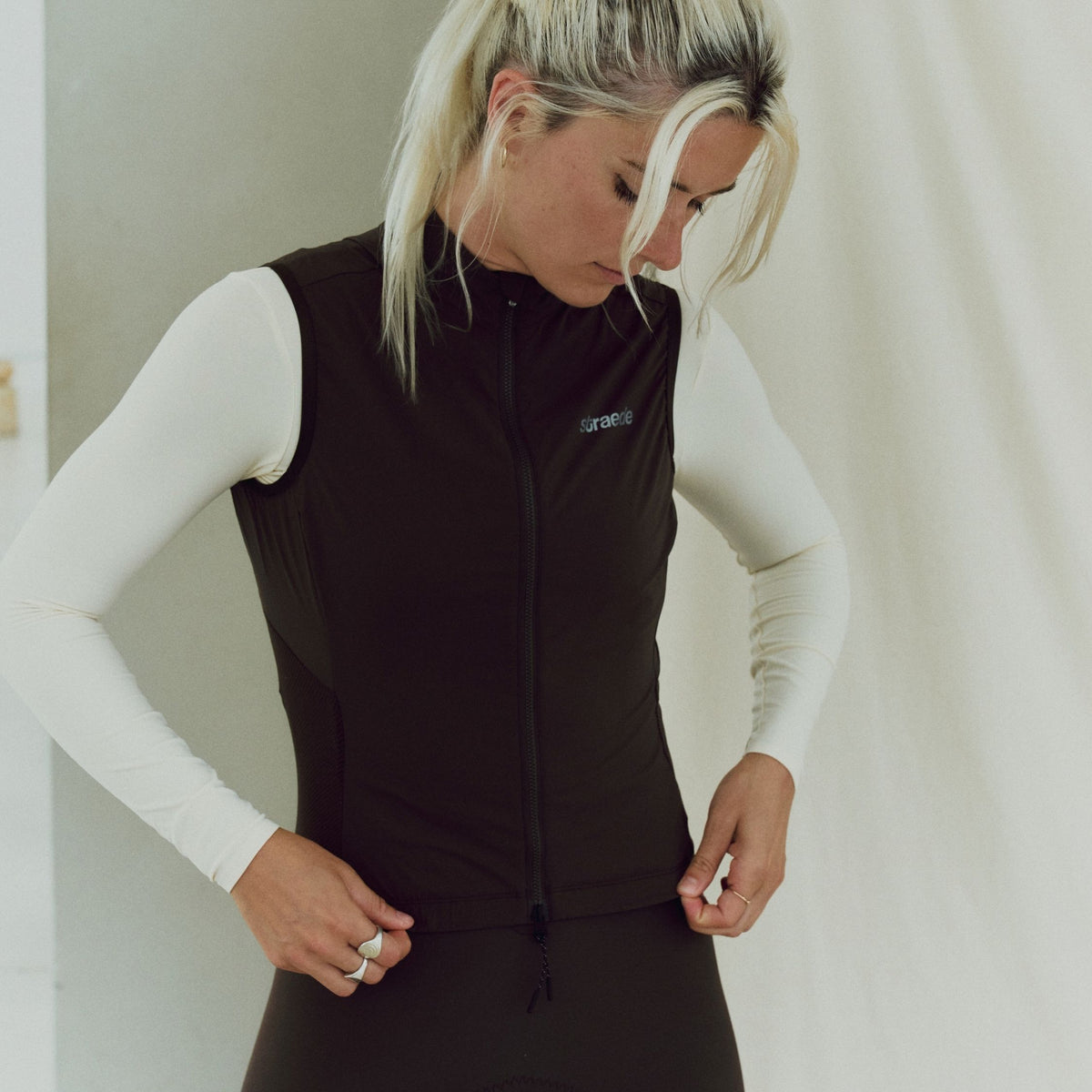
Vest or windbreaker: wind protection that packs down small
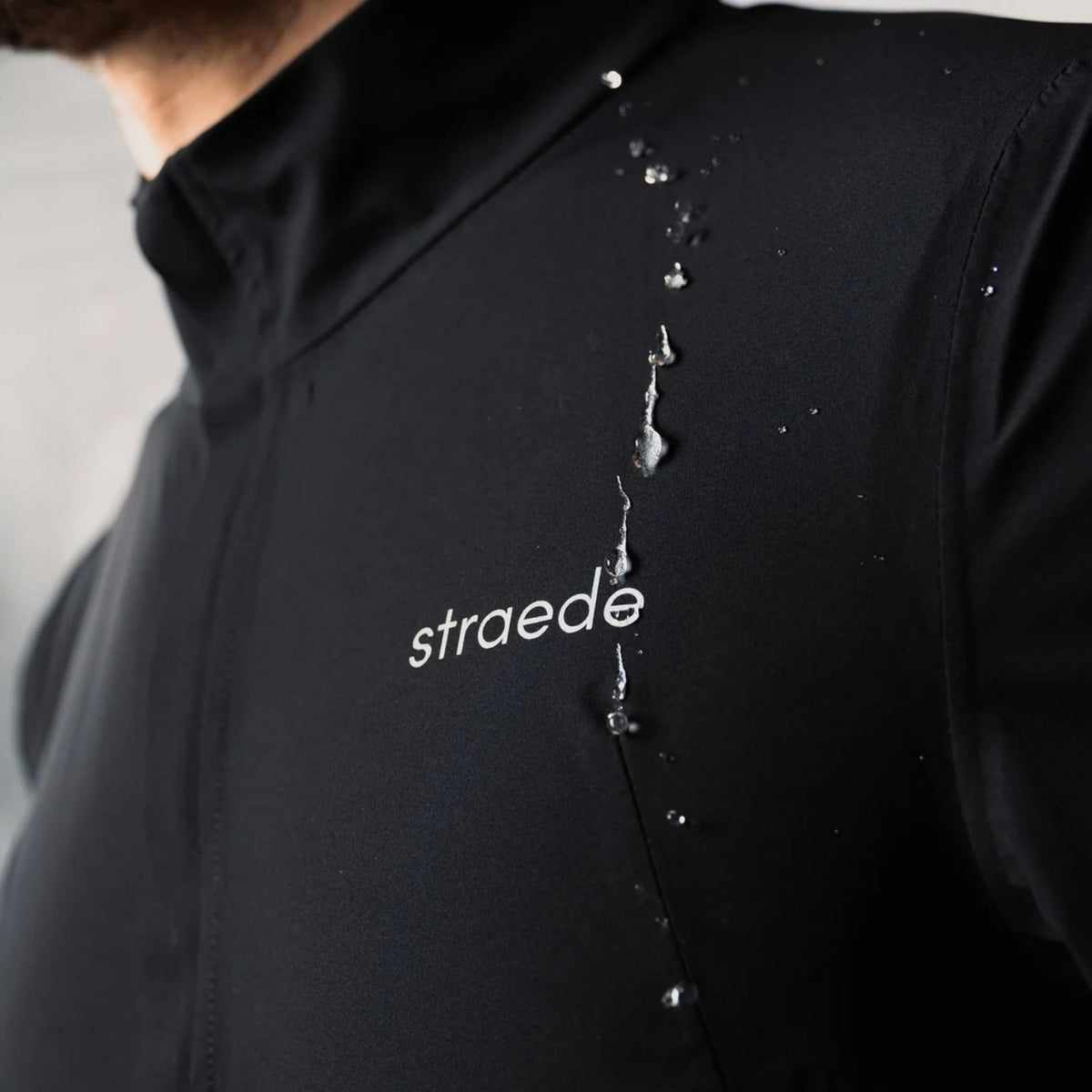
Rain jacket: staying dry without overheating
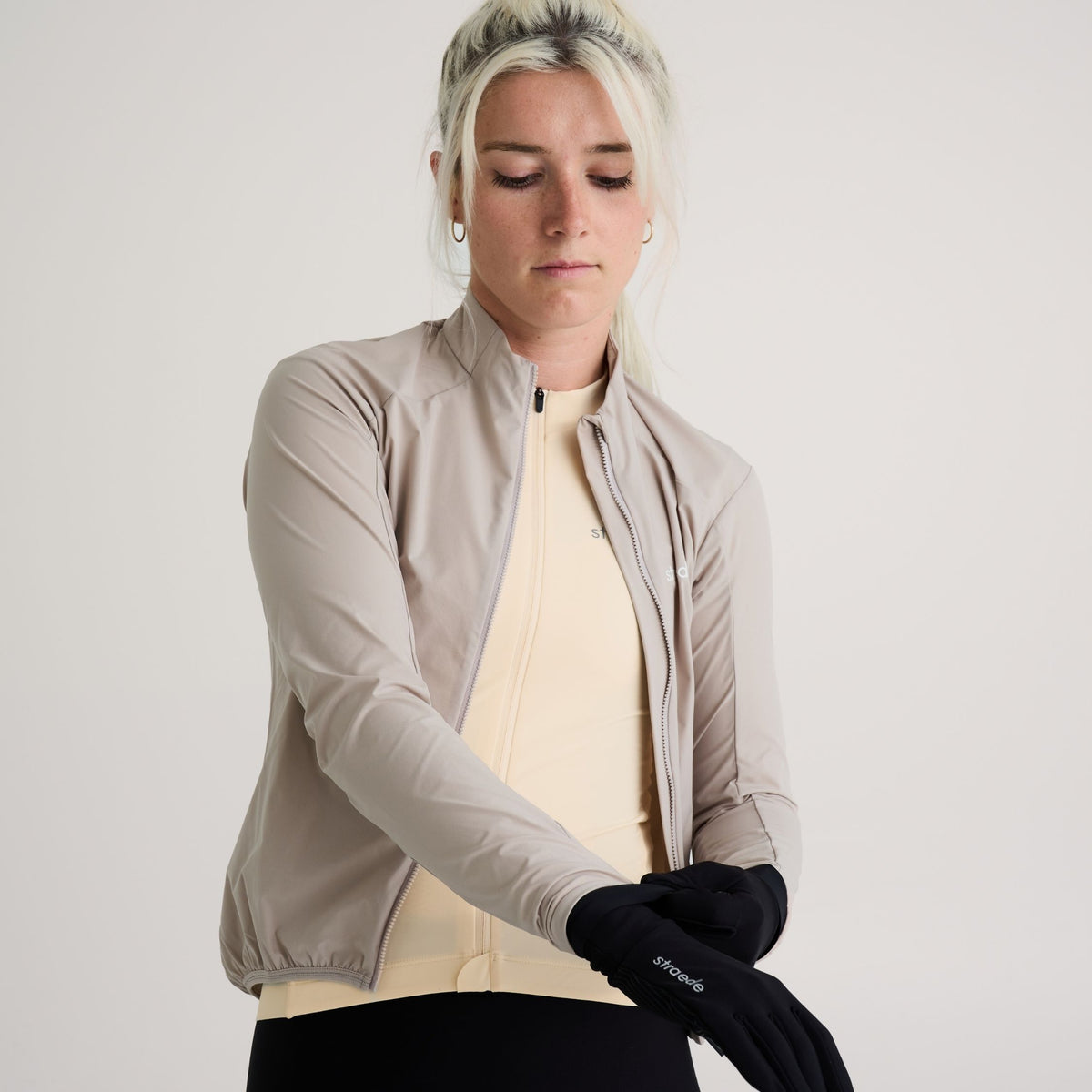
Gloves, socks and neck tube
Three typical autumn rides
- The Sunday ride that warms up: Starting at 9 °C, 17 °C at midday. Short-sleeve jersey with arm warmers, bib shorts with leg warmers, a vest and light gloves in your pocket. After the first hour the arm and leg warmers go into the jersey pocket, and later the vest follows. If you would rather not change anything along the way, you ride the same route in a Aerlig Longsleeve and long bib tights, and regulate your temperature via the zipper.
- The grey day that stays cool: 10 °C in the morning, 12 °C at midday. Baselayer, Kaern Longsleeve and long bib tights are enough. You have nothing to take off, and for cooler descents the windbreaker stays within reach in your pocket.
- The after-work ride that cools down: 15 °C when you set off, then the temperature drops quickly. A short-sleeve jersey with arm warmers and bib shorts are enough for the start, and you take the windbreaker along for the last hour.
When it gets colder for good
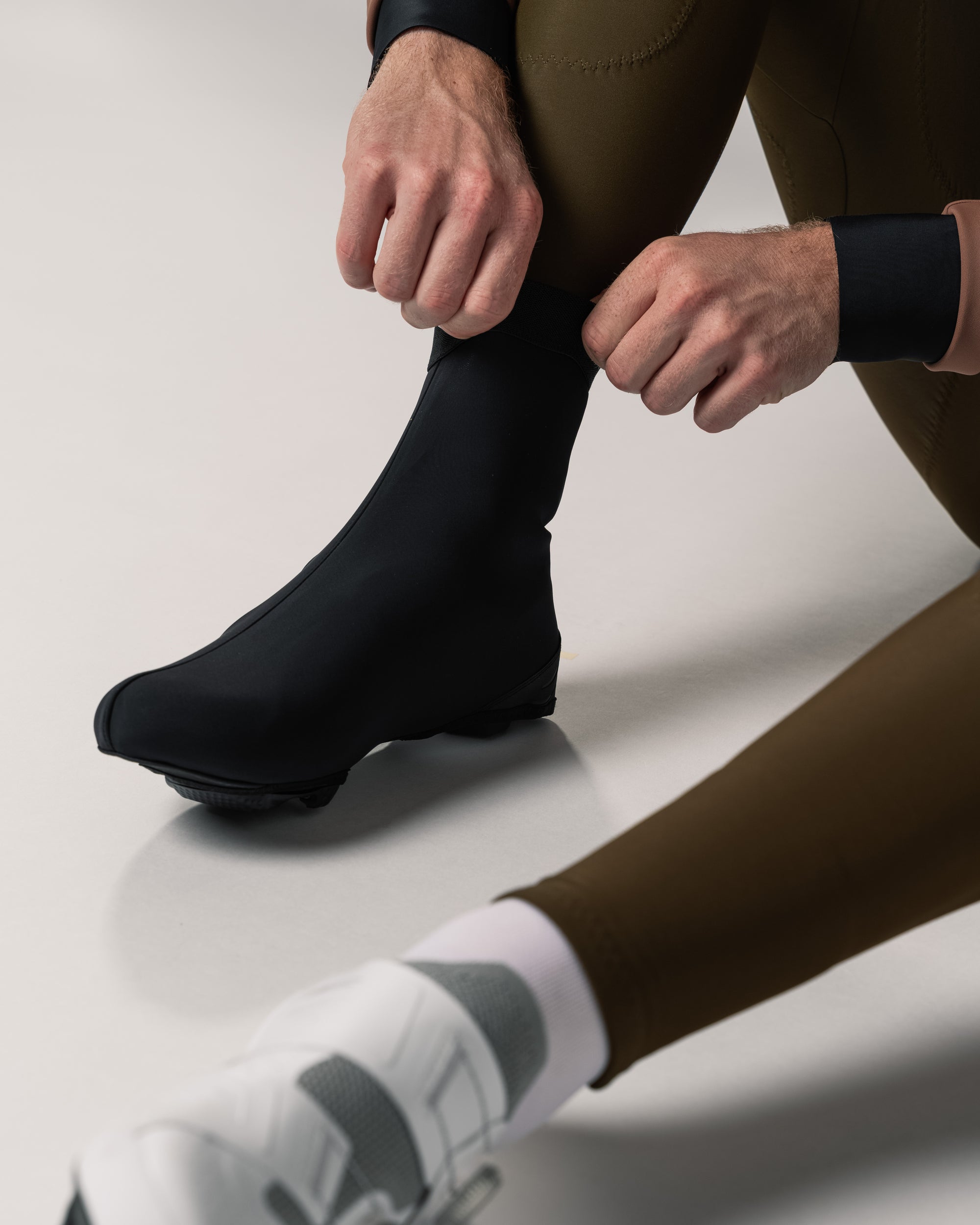
As soon as it no longer gets warmer even at midday, the autumn principle is not enough. You then need a warming combination of merino baselayer, thermal jersey, winter jacket and long thermal bib tights, plus winter gloves and overshoes. Which pieces go together for that is in the winter guide.
For cool days: tights, leg warmers & overshoes
Your autumn bundle
If you would rather not put your kit together piece by piece, you can use the Mix & Match Fall Bundle Men or Mix & Match Fall Bundle Women to put together your autumn wardrobe yourself. You choose between four and ten pieces and combine them to suit your rides. Colours and designs are matched, so that everything goes together.
One click to look good.
You can find the full selection for the cooler season in our collections for autumn and winter cycling clothing for men and for women.
Conclusion
For autumn you do not need a large selection of individual pieces; what matters are garments that combine flexibly. If it gets warmer, you start with a short-sleeve jersey, arm warmers, bib shorts and leg warmers and can take a layer off later. If it stays cool, a long-sleeve jersey and long bib tights are the uncomplicated choice. Add a baselayer and a wind layer in your back pocket and you are well prepared for most autumn days, without studying the forecast at length before every ride.
Frequently asked questions about the right road cycling outfit in autumn
How warmly you dress depends not only on the temperature, but also on your pace and on how you personally feel the cold. The answers here give you good orientation; you will work out the rest quickly on your first autumn rides.
A baselayer, a short-sleeve and a long-sleeve jersey, bib shorts or long bib tights, plus a vest, windbreaker, arm warmers, leg warmers and light gloves cover most conditions. Depending on temperature and weather you combine the individual pieces differently, and that sets you up for the whole autumn season.
If you never take the arm warmers off during a ride, a long-sleeve jersey is usually the more comfortable choice. As long as the temperature changes noticeably along the way, the combination of a short-sleeve jersey and arm warmers stays more flexible.
Usually not yet. As long as the temperature still rises during the day, a long-sleeve jersey with a vest or windbreaker will get you through most rides. A winter jacket becomes interesting once it stays cold during the day as well.
Wash wet and dirty pieces as soon as possible after the ride, cold and without fabric softener. How to keep technical fabrics and chamois in good shape over several seasons is explained in our care guide.
You can find the right measurements for every cut in the size chart on the relevant product page. If you are between two sizes or unsure, write to us at support@straede.cc, and we will gladly help you find the right size.